


The Broken Promise: Filipino WWII Veterans and the Rescission Act of 1946
UGAT CLOTHING · HISTORY · Filipino American History Month Series
Post 9 · The Broken Promise: Filipino WWII Veterans and the Rescission Act of 1946
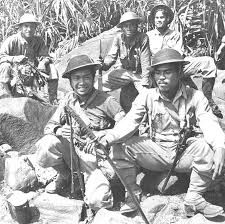
On July 26, 1941, President Franklin D. Roosevelt signed an executive order calling all Filipino military forces into the service of the United States Army, with a clear promise: full veterans' benefits for all who served. Over 250,000 Filipinos answered that call. They survived the Bataan Death March, fought Japanese occupation for years in the jungles and mountains of their homeland, and liberated the Pacific alongside American soldiers. Then, on February 18, 1946 — with the war won and independence coming — Congress stripped every one of those promises away. Most of those men waited the rest of their lives for justice. Most died still waiting.
Almost every Filipino American family has one. A lolo who served. A great-uncle whose papers were never processed. A grandfather who came back from the war and spent the following decades fighting a different battle — a paper one, through letters and lawyers and congressional hearings — for the veterans' benefits he had been promised and then denied.
The story of Filipino WWII veterans and the Rescission Act of 1946 is arguably the most personal injustice in Filipino American history — because unlike the other stories in this series, it is not something that happened to workers, or to farmers, or to a specific community in a specific city. It happened to the men who carried rifles. Who starved in Bataan. Who were beaten and bayoneted on the Death March. Who hid in the mountains and fought guerrilla campaigns for three years while waiting for MacArthur to return. Who liberated their own country alongside American soldiers and then came home to a letter telling them their service didn't count.
It is one of the most consequential broken promises in American military history. And it is still, technically, on the books.
260,000
Filipinos who served in U.S.-commanded forces in WWII
57,000
Filipino military casualties in the war
$3.2B
Estimated cost of full benefits — the figure Congress cited to justify the Rescission Act
$200M
What Congress gave instead — a single payment to the Philippine government, not to veterans
63 yrs
How long veterans waited before any equity compensation — 1946 to 2009
1
Of 66 allied nations whose veterans were singled out for denial of benefits
The Promise: July 26, 1941
By the summer of 1941, the clouds over the Pacific were unmistakable. Japan had been advancing across Asia for years. The Philippines — a U.S. Commonwealth territory since 1935, promised independence in 1946 — sat directly in Japan's path. On July 26, 1941, President Franklin D. Roosevelt signed an executive order that changed everything: he called all organized military forces of the Philippine Commonwealth into the service of the United States Army.
With that order, Filipino soldiers became members of the United States Army Forces in the Far East — USAFFE — under the command of General Douglas MacArthur, who had been recalled to active U.S. duty the same day. They were, in every legal and functional sense, American soldiers. And they were promised exactly what American soldiers were promised: full veterans' benefits upon the conclusion of their service.
The promise was explicit. It was backed by the authority of the President of the United States. It was the reason hundreds of thousands of Filipino men enlisted, trained, and prepared to fight.
Four months and eleven days later, Japan bombed Pearl Harbor.

Who Served Under the American Flag
🪖 Philippine Commonwealth Army: The main force called into U.S. service by Roosevelt's July 1941 executive order. Approximately 120,000 men, many undertrained and underequipped, who formed the core of the Bataan defense.
🎖 Philippine Scouts: A longstanding corps of Filipino soldiers who served as part of the regular U.S. Army — among the best-trained Filipino forces. Unlike Commonwealth Army soldiers, Scouts were already considered full U.S. Army members before the war.
🗡 Philippine Guerrillas: After the fall of Bataan and Corregidor, tens of thousands of Filipinos continued fighting Japanese occupation as recognized guerrilla units — often in brutal conditions, cut off from supply lines, sustaining resistance for three years until MacArthur's return.
🇺🇸 First and Second Filipino Infantry Regiments: Activated in California in 1942, composed largely of Filipino immigrants and Filipino Americans already living in the U.S. They trained on American soil and served in the Pacific theater.
📜 Legal status: All groups served under direct U.S. military command pursuant to Roosevelt's executive order. That order, as Truman himself later noted, was never revoked or amended — which made the Rescission Act's retroactive erasure of their service all the more legally and morally extraordinary.
Bataan: What They Gave
The Japanese attacked the Philippines on December 8, 1941 — just hours after the bombing of Pearl Harbor. MacArthur's forces were quickly overwhelmed. The Japanese landed in force on Luzon, and the combined Filipino and American forces fell back in a fighting withdrawal to the Bataan Peninsula, a thumb of jungle-covered land across the bay from Manila.
What followed was one of the most dramatic and costly defensive stands in American military history. Filipino soldiers made up approximately seven-eighths of the main line of resistance in the Battle of Bataan. They were often the ones holding the line while American forces retreated to better positions. They were fighting on their own soil, for their own homeland — and for the United States that had called them to arms.
MacArthur had promised reinforcements. The reinforcements never came. The Philippines, in the strategic calculus of the war, had been designated a secondary front — the "Europe First" policy meant that resources flowed to the Atlantic theater. The Filipino and American soldiers on Bataan were, in effect, abandoned to hold as long as they could on half rations, without air cover, without medicine, without hope of rescue.
They held for ninety-nine days.
On April 9, 1942, after three months of combat under conditions of severe starvation and disease, General Edward King surrendered the Bataan forces — approximately 75,000 soldiers, 63,000 of them Filipino. It was the largest surrender in American military history since the Civil War.
What came next was worse.
The Bataan Death March — April 1942
After the surrender, the Japanese military organized the transfer of approximately 76,000 prisoners of war from the southern tip of the Bataan Peninsula to prison camps in the north — a forced march of roughly 65 miles in searing heat, without adequate food, water, or medicine.
The march lasted five to ten days depending on where a prisoner began. Those who could not keep pace were beaten, bayoneted, shot, or beheaded. An estimated 6,000 to 10,000 Filipinos and 750 Americans died during the march itself. Thousands more died in the prison camps that followed. At Camp O'Donnell, approximately 26,000 Filipino prisoners died in the first 73 days of operation.
Of the Filipino soldiers who survived Bataan, thousands continued fighting as guerrillas under Japanese occupation — harassing Japanese supply lines, providing intelligence to American forces, protecting civilians, and waiting for the Americans to return. Many died doing so. Their service lasted not months but years, in some of the most dangerous conditions of the entire Pacific war.
These are the men Congress declared, in 1946, had not performed "military service of the United States."
"You men remember this. You did not surrender — you had no alternative but to obey my order."
— General Edward P. King Jr., to his troops at the surrender of Bataan, April 9, 1942
February 18, 1946: The Day the Promise Died
The war ended in August 1945. MacArthur had returned, as promised. The Philippines had been liberated. Filipino soldiers had fought alongside American troops all the way to the final victory. Now, as millions of American veterans prepared to take advantage of the GI Bill — the landmark 1944 law offering tuition, housing loans, and medical care to all who had served — Filipino veterans prepared to receive their own promised benefits.
Instead, Congress was looking for ways to cut the budget.
An October 1945 report from the Veterans Administration estimated that providing full benefits to Filipino veterans would cost approximately $3.2 billion over their lifetimes. To budget-conscious members of Congress eager to reduce wartime spending, this was an appealing target. The Philippines was about to become independent on July 4, 1946 — which gave Congress a convenient justification: Filipino veterans could become the Philippine government's responsibility.
Senator Carl Hayden of Arizona, the same senator who had championed the GI Bill for American veterans, led the effort. On February 18, 1946, President Truman signed the First Surplus Rescission Act into law. A second act followed in May. Together, they declared that service in the Philippine Commonwealth Army, the Philippine Scouts, and the recognized guerrilla units — all forces that had served directly under U.S. command pursuant to Roosevelt's executive order — would not be deemed to have been service in the military or naval forces of the United States for the purposes of any benefit law.
Overnight, retroactively, without any individual notice or hearing, hundreds of thousands of veterans were legally reclassified as non-veterans. The GI Bill that their American comrades were already using to attend college, buy homes, and build postwar lives did not apply to them. The VA hospitals that were treating American veterans with the same wounds were not available to them. Of the 66 nations whose soldiers fought under the American flag in World War II, the Philippines alone was singled out for this treatment.
The GI Bill — American Veterans (1944)
✅ College tuition and counseling
✅ Low-cost home mortgage loans
✅ Free medical care at VA hospitals
✅ Unemployment insurance
✅ Full disability compensation
✅ Death benefits for families
✅ Recognition as U.S. military veterans
Filipino Veterans After the Rescission Act (1946)
❌ No college benefits
❌ No home loan access
❌ No VA hospital access (until 2003)
❌ No unemployment coverage
❌ Disability at 50 cents on the dollar
❌ Limited survivor benefits
❌ Legally declared not to have served
President Truman's Statement Upon Signing the Rescission Act — February 18, 1946
"This legislation does not release the United States from its moral obligation to provide for the heroic Philippine veterans who sacrificed so much for the common cause during the war… They fought, as American nationals, under the American flag, and under the direction of our military leaders. Their official organization, the Army of the Philippine Commonwealth, was taken into the Armed Forces of the United States by executive order of the President of the United States on July 26, 1941. That order has never been revoked or amended. I consider it a moral obligation of the United States to look after the welfare of Philippine Army veterans."
— President Harry S. Truman, signing statement on the Rescission Act, February 18, 1946
Truman knew it was wrong. He said so, in writing, at the moment he signed it. He knew there were few Filipinos in the United States to vote in the next election, and that Congress was unlikely to reverse course. He signed it anyway — and for sixty-three years, his "moral obligation" statement collected dust while Filipino veterans grew old and died uncared for.
Bayani Collection — For Every Bayani Whose Name History Almost Forgot
The men who fought on Bataan, who marched through the jungle, who held guerrilla positions for three years waiting for MacArthur to return — they were bayani. Heroes. The Bayani Collection at UGAT was made for them and for every Filipino American who carries their memory.
The Long Wait: 1946 to 2009
For sixty-three years, Filipino veterans and their advocates fought a legislative war for what the battlefield war had already been won. It was conducted in courtrooms, in congressional hearing rooms, in letters to senators, in protests outside the White House, in the quiet persistence of men who aged from their twenties to their eighties still asking for what they had been promised.
1946
Rescission Acts signed. Filipino veterans legally reclassified as non-veterans overnight. The Philippine government receives $200 million — meant to substitute for individual benefits. Most veterans never see a meaningful portion of it.
1946–
1990s
Decades of advocacy by Filipino veterans' organizations — rallies, petitions, legal challenges. Small incremental concessions: some disability payments at 50 cents on the dollar, some death and burial benefits. None approaching what was promised.
1990
Congress grants Filipino veterans the right to naturalize as U.S. citizens based on their military service — one of the first meaningful reversals. Over 20,000 veterans naturalize. Many immigrate to the United States, bringing their fight for benefits with them to American soil.
1995
Filipino veterans rally in front of the White House in August, demanding equity. The images — old men in military dress, holding signs, asking for what their comrades received half a century earlier — circulate through the Filipino American community.
1998
At a congressional hearing, then-Representative Nancy Pelosi calls the Rescission Act "a scar on the historical record of the United States." The hearing produces no legislation.
2003
VA health benefits extended to Filipino American World War II veterans living in the United States — but not to those still living in the Philippines. The two-tier system means that veterans who were unable to immigrate receive less than those who could afford to.
2009
President Barack Obama signs the American Recovery and Reinvestment Act, which includes the Filipino Veterans Equity Compensation Fund: a one-time lump sum of $15,000 for surviving veterans who are U.S. citizens, and $9,000 for non-citizens. Approximately $198 million is released. Fewer than 15,000 veterans are still alive to receive it.
2016
Congress passes the Filipino Veterans of World War II Congressional Gold Medal Act. On October 25, 2017, the gold medal — the highest civilian honor Congress can award — is presented to Filipino WWII veterans in a ceremony in Washington. A single gold medal, to be displayed at the Smithsonian, representing all of them.
Today
Fewer than 2,000 Filipino WWII veterans are estimated to still be alive. The Rescission Act — 38 U.S.C. § 107 — remains on the books. The Filipino Veterans Fairness Act, introduced in 2023, seeks to grant full benefits to remaining veterans and their families. It has not yet passed.
"Filipino veterans in our armed forces rendered services that were identical to that rendered by other, non-Filipino soldiers who were American nationals or who held United States citizenship."
— Senator Daniel K. Inouye (D-HI), who championed the Filipino veterans' cause for 20 years in Congress, criticizing the Rescission Act's "anti-Filipino discriminatory intent"
The Records Problem: When the War Itself Destroyed the Proof
Even as partial remedies were enacted, a brutal irony emerged: many veterans could not prove they had served.
The war itself had destroyed the records. Military archives in the Philippines were bombed, burned, or captured by Japanese forces during the occupation. Units that had fought as guerrillas operated without formal documentation systems — they were in the jungle, fighting for survival, not filing paperwork. When Japan occupied Manila, administrative records that might have proven a soldier's service were lost or deliberately destroyed.
When veterans tried to claim the $15,000 equity payment in 2009, they found themselves caught in an impossible bureaucratic bind: to receive benefits for their service, they had to prove their service to a bureaucracy that had stripped them of their veteran status sixty-three years earlier and then allowed the records of that status to be destroyed by a war. Many claims were denied. Many veterans died before their claims were resolved.
As one advocate described it: the men who survived the Bataan Death March, survived Japanese prison camps, survived three years of guerrilla warfare — could not survive American paperwork.
The Documentation Catch-22
🗂 The requirement: To receive compensation under the 2009 fund, veterans had to document their military service.
💣 The problem: WWII combat in the Philippines destroyed much of the documentary record. Japanese forces captured or destroyed military archives during occupation. Guerrilla units operating in the mountains kept minimal records. The National Personnel Records Center fire of 1973 in the U.S. destroyed millions of military service records.
⏳ The time factor: By 2009, many potential claimants were in their 80s and 90s, with limited access to documentation resources and legal assistance.
💀 The result: Thousands of legitimate claims were denied. Many veterans died while their claims were still being processed. Their families inherited the denial — and continued fighting.
🔄 Today: Organizations like the Filipino Veterans Recognition and Education Project (FilVetREP) are still working to document surviving veterans and their closest living relatives, building a national registry decades after the fact.
Why the Rescission Act Is Still Not Fully Resolved
The Congressional Gold Medal of 2016 was significant. The 2009 equity payments were real, if deeply inadequate. VA health benefits have been extended, at least to those living in the United States. The story is better known now than it was in 1990, or 1960, or 1946.
But the Rescission Act is still law. Section 107 of Title 38 of the United States Code still states that Philippine Commonwealth Army service "shall not be deemed to have been active military, naval, or air service" for the purposes of U.S. veterans' laws. The law that Congress passed in 1946 to strip these men of their status has never been fully repealed. It has been partially mitigated, incrementally amended, publicly condemned by presidents and senators — and it is still there.
And the remaining veterans — fewer than 2,000, nearly all in their late nineties — are still waiting for full equity. The Filipino Veterans Fairness Act, which would grant benefits to surviving veterans and the families of deceased veterans, has been proposed in multiple congressional sessions. It has not passed.
The men who survived the Bataan Death March, who fought three years in the Philippine jungles, who helped liberate the Pacific — they are now, in the most literal sense, almost gone. The window to make good on the promise is closing in real time.
"Let us never forget that our veterans endured a lifetime of injustice and indignation inflicted by a shameful act of Congress. It was an ugly stain in this nation's history."
— General Antonio Taguba (U.S. Army, Ret.), Chairman, Filipino Veterans Recognition and Education Project (FilVetREP)
Your Lolo's Story — and Why You Need to Ask
Almost every Filipino American family has this story somewhere in its history. An uncle who kept his discharge papers in a box under his bed for forty years, not knowing what to do with them. A grandfather who never talked about the war, who had learned not to — because talking about it meant remembering the promise, and remembering the promise meant feeling the betrayal again. A lolo who aged quietly in the provinces, who had fought for the United States and watched his American comrades receive everything while he received nothing.
The silence in many Filipino families around WWII is not accidental. It is the product of a specific wound — the wound of having served, having sacrificed, having been promised dignity, and having been denied it by the country you fought for.
If you have elders in your family who served in the war — or who might have — this is the moment to ask. To find the papers. To help document what happened. Organizations like FilVetREP are still building the national registry. Family members of deceased veterans may still be able to have their ancestor's service recognized. The window is narrow, but it has not closed.
And even if it has closed for your family — even if the men who served are gone and the chance for compensation has passed — knowing their story matters. Saying their names matters. Carrying their history matters. The Rescission Act tried to make it as though their service never happened. Every Filipino American who knows this history is evidence that it did.
Bayani — Named for Heroes Like Them
Bayani means hero. The men who marched on Bataan, who fought in the mountains, who waited sixty-three years for recognition — they were bayani in every sense. The Bayani Collection at UGAT was designed to carry that word — and their story — into every room you enter.
Shop Bayani Collection →Bayani Canvas ArtBayani PostersBayani Mini PrintsMakibaka CollectionFilipino American History Collection
The Promise Was Real. The Debt Is Real.
On July 26, 1941, the President of the United States made a promise. He signed it. He issued it under the authority of the Constitution. Filipino men enlisted on the strength of that promise — not naively, not out of passivity, but because they were American nationals fighting for an American territory under American command for American strategic interests.
They held Bataan for ninety-nine days. They walked sixty-five miles in the heat without food or water while Japanese soldiers beat and killed those who fell. They fought for three more years in the jungle. They were there when MacArthur returned. They were there when the Philippines was liberated. They were there when Japan surrendered.
Then they went home. And six months later, Congress told them they had never served.
That is what the Rescission Act of 1946 was. Not a budget decision. Not a technicality. A decision — deliberate, specific, applied to exactly one group of all the nations that fought with America — to say: your service did not count.
President Truman called it a moral obligation that had not been erased. Senator Inouye called it discrimination. General Taguba called it a shameful act. Representative Pelosi called it a scar.
And the men who survived Bataan, who are still alive — fewer now than two thousand — are still waiting.
Their names deserve to be spoken. Their service deserves to be recognized. Their promise deserves to be kept.
💬 Your Family's Story
Did your lolo, your great-uncle, or another family member serve in WWII — in the Philippine Commonwealth Army, as a guerrilla, with the Philippine Scouts, or in the Filipino Infantry Regiments in the U.S.? Share their story in the comments. If you're looking to document a relative's service for benefit purposes, organizations like FilVetREP (filvetrep.org) and the American Coalition for Filipino Veterans can help. Every name recorded is one less name history loses.
📖 FAHM Series: "Mga Bayani ng Kasaysayan" — The Full Timeline
Part of UGAT's Filipino American History Month series, ordered as history happened.
Know Your Roots
Get Filipino heritage stories, new collection drops, and cultural deep-dives from UGAT — not just in October.
Comments